
Time Loop Hunter
Play Time Loop Hunter
Time Loop Hunter Screenshots



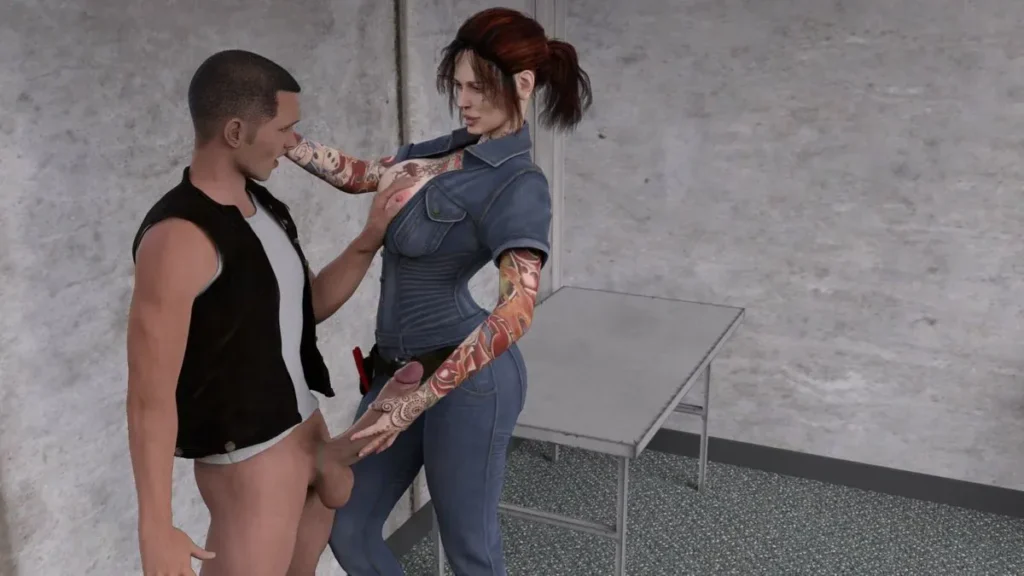

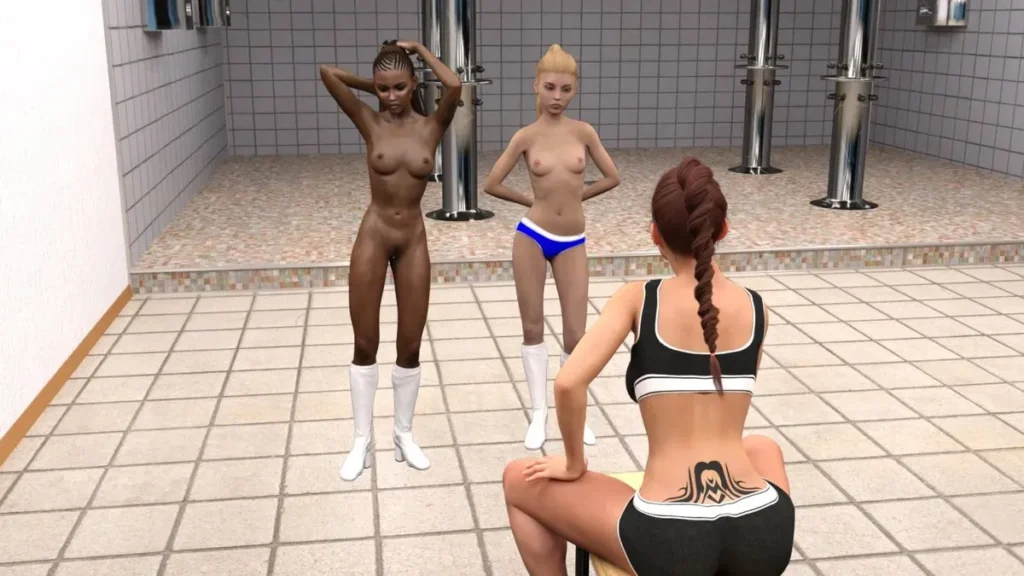

Time Loop Hunter review
Master the 15-day reset framework and uncover all endings in this narrative-driven adventure
Time Loop Hunter stands out as a narrative-driven adventure that combines compelling storytelling with innovative time manipulation mechanics. Players assume the role of Jon, a 22-year-old protagonist facing life’s challenges, who gains the ability to control a 15-day time loop through a neural implant. This unique framework allows you to explore different choices, uncover hidden storylines, and shape relationships that influence how the narrative unfolds. Whether you’re drawn to mystery-solving, character development, or experimenting with branching storylines, this guide covers everything you need to maximize your gaming experience and discover all the game has to offer.
Understanding the Core Mechanics of Time Loop Hunter
Ever been stuck in a game, made one wrong dialogue choice, and felt like you’ve ruined your entire playthrough? 😫 You’re left staring at the screen, wondering if you should reload a save from five hours ago or just live with your mistake. I’ve been there, and it’s the worst feeling. Time Loop Hunter takes that classic gamer anxiety and flips it on its head. Instead of punishing you for a misstep, its core Time Loop Hunter mechanics are built around the beautiful idea of a second chance… and a third… and a hundredth. 🕰️
At its heart, this isn’t just a game with a time loop; it’s a game about the time loop. Your understanding and mastery of the cycle is the progression. Forget linear paths and permanent failures. Here, every ending, every locked door, and every tragic outcome is just another piece of data for your next attempt. Let’s break down exactly how this brilliant system works.
How the 15-Day Reset Framework Functions
The entire world of Time Loop Hunter operates on a rigid, 15-day calendar. From the moment you, as Jon, become aware of your situation, the clock starts ticking. This 15-day reset cycle gameplay is the game’s primary heartbeat and your greatest tool. Think of it not as a prison, but as the ultimate sandbox. 🏖️
The loop always begins on the “First Morn” and culminates in a catastrophic “Reset Event” on the dawn of the 16th day. No matter what you do—save the city, uncover a conspiracy, or spend two weeks trying to perfect your coffee order—the loop will reset. You’ll wake up back in your apartment, but crucially, you remember everything.
This structure completely redefines player goals. A traditional game asks, “How do I win?” Time Loop Hunter asks, “What do you want to learn this time?” Your objective shifts from a single victory to a layered investigation. Maybe Loop #1 is just for mapping the city and learning basic schedules. Loop #2 could be dedicated to gaining a specific character’s trust. By Loop #7, you’re executing a complex plan to isolate and expose a parasitic entity, using intel gathered across multiple resets.
This cyclical nature is what makes the parasitic entity investigation gameplay so unique. You can’t solve this mystery in one clean run. These entities are hidden, their influence subtle. You need to witness events from different angles, cross-reference information from different days, and test theories that would be far too risky in a linear story.
To help you plan your loops, here’s a breakdown of how the 15-day cycle is typically structured:
| Time Period | Key Events & Opportunities | Character & Location Focus |
|---|---|---|
| Days 1-3 (Setup) | Re-establishing contacts, gathering initial clues, low-stakes exploration. The city is “normal.” | Core cast is in their usual routines. Public areas like the transit hub and central plaza are most active. |
| Days 4-9 (Investigation) | Parasite influence becomes more noticeable. Key story events are triggered based on your prior actions. Best window for deep relationship building. | Characters may deviate from schedules. Restricted areas (like the Archives or Bio-Labs) may become accessible if you have the right credentials from a previous loop. |
| Days 10-14 (Convergence) | The hidden plot accelerates rapidly. Critical choices that determine the loop’s outcome must be made. The window for preventing the Reset Event is small. | Many characters are under direct stress or influence. Key locations may become dangerous or locked down. |
| Day 15 (Climax) | The final sequence before the reset. This is where your accumulated knowledge and preparations are put to the ultimate test. | All paths lead to the epicenter of the Reset Event. Character allegiances are finalized. |
🎯 Pro Tip: Don’t try to do everything in one loop! The 15-day reset cycle gameplay is designed for specialization. Dedicate a loop to being a charismatic friend, another to being a stealthy hacker, and another to being a confrontational hunter. The game remembers your cumulative progress.
Time Manipulation and Neural Implant System
So, how does Jon actually interact with this loop? It’s not magic—it’s advanced, slightly unsettling technology. The key is Jon’s neural implant time control device. This isn’t just a lore excuse for the mechanic; it’s your in-game interface and your character’s defining trait. 🧠⚡
Early in the story, Jon discovers he has a prototype neural implant called the “Chronos Link.” Initially believed to be just a cognitive enhancer, it’s what allows his consciousness to persist through each reset when everyone else’s memories are wiped clean. More than just making you remember, it actively gives you tools to manipulate the flow of time within a single loop.
This is where the fantastic time manipulation mechanics come into play. The implant has a limited energy pool that recharges slowly, allowing you to perform feats like:
* Temporal Echo: Briefly rewind local time by 10-30 seconds to reattempt a failed skill check or choice. Perfect for re-rolling a persuasion attempt or avoiding a detected sneak.
* Perception Slow: Drastically slow down your perception of time, letting you analyze a fast-moving scene or choose a dialogue option without pressure.
* Memory Spike: Force a vivid recollection of a specific detail from a previous loop, which can unlock new dialogue options in the current one.
The genius of this neural implant time control system is that it makes the loop feel active. You’re not just passively waiting for the reset; you have agency within each day. Managing your implant’s energy becomes a critical part of strategy. Do you use a costly rewind to save a civilian now, or save that power for a crucial investigation later tonight?
This technology is also the linchpin of the parasitic entity investigation gameplay. The entities hide within their hosts’ subconscious. To find and eliminate them, you must use your implant to perform a “Psionic Dive”—a mini-game where you navigate a host’s memoryscape, looking for the anomalous, corrupting presence. It’s a high-stakes game of mental hide-and-seek that directly uses your time manipulation mechanics to stabilize the dive and avoid detection.
Decision-Making and Consequence Management
This is where Time Loop Hunter separates itself from every other narrative game. The decision-making system Time Loop Hunter employs is a masterclass in encouraging creativity and removing fear. In most games, your choices are branches on a tree; some branches are dead ends. In Time Loop Hunter, the entire forest is yours to explore, burn down, and regrow. 🌳➡️🔥➡️🌱
The core principle is simple: Nothing is permanent except the knowledge you gain. Made a choice that got a key character killed? The loop will reset. Told a devastating secret that destroyed a friendship? The loop will reset. This fundamentally changes your psychology as a player. You are free to experiment, to be rude, to fail spectacularly, all in the name of gathering information.
The system’s brilliance is in how it rewards this experimentation. When you restart a loop, you retain all the memories, items (in a knowledge sense), and relationship insights from before. The game then layers new options onto familiar scenarios based on what you “know.” For example, if you learned in Loop #3 that Character A is terrified of heights, in Loop #4 you might have a new, more effective way to distract them during a critical moment.
Let’s walk through a practical example of how to use time loops effectively:
Scenario: You need to get a keycard from a guarded lab on Day 6.
* Loop 1 (The Scout): You try to bluff your way in. It fails, and you’re thrown out. But you observe the guard’s routine, hear him mention his daughter’s soccer game, and see where he keeps the keycard.
* Loop 2 (The Social Engineer): You use your memory. Before Day 6, you find the guard at the park on Day 4. You strike up a conversation about soccer (a new dialogue option unlocked because you remember his interest). You build rapport.
* Loop 2, Day 6: When you approach the lab, a new option appears: “Ask about his daughter’s big game.” The guard, happy to see a friendly face, lets you in “for just a minute.” You get the card.
* Loop 3 (The Ghost): With knowledge of the lab’s layout from Loop 2, you decide on a different approach. You use your implant’s Perception Slow to sneak past the guard entirely when he steps away for his coffee break, a timing you memorized.
This example shows how the decision-making system Time Loop Hunter turns a single obstacle into a puzzle with multiple solutions, each built upon the last. The “consequence” of a failed loop isn’t game over; it’s a vital piece of the strategy guide you’re writing in your own mind.
This philosophy extends powerfully to relationships. You can’t max out a trust meter in one loop. True connection requires shared experiences across multiple timelines. You might save someone from a mistake in one loop, console them over a loss in another, and share a secret in a third. The game tracks this cumulative emotional history, leading to profoundly earned moments of trust that would be impossible in a linear story.
Ultimately, the Time Loop Hunter mechanics fuse together into an experience that is both intellectually stimulating and emotionally resonant. The 15-day reset cycle gameplay provides the structure. The neural implant time control provides the agency. And the revolutionary decision-making system Time Loop Hunter provides the freedom. You stop playing to “see what happens,” and start playing to learn what is possible. Every reset is not a failure, but a step closer to mastering time itself and uncovering every truth hidden within the loop. 🏆
Time Loop Hunter delivers a compelling gaming experience that seamlessly blends narrative depth with innovative time manipulation mechanics. The 15-day reset framework creates a unique foundation for exploration, allowing you to experiment with different choices, build meaningful relationships, and uncover the mystery surrounding the parasitic entity threatening the world. By mastering the decision-making system, investing time in character development, and systematically exploring alternative paths, you’ll unlock the full potential of what this game offers. Whether you’re drawn to the intricate investigation elements, the branching storylines, or the satisfaction of discovering all multiple endings, Time Loop Hunter rewards thorough exploration and creative experimentation. Embrace the freedom to try new approaches, pay attention to how your choices ripple through the narrative, and don’t hesitate to replay loops to discover hidden content and alternative character interactions. Your journey through Jon’s story will be uniquely shaped by the choices you make, making each playthrough a fresh opportunity to experience new facets of this richly crafted adventure.