
The Silver Lining
Play The Silver Lining
The Silver Lining Screenshots


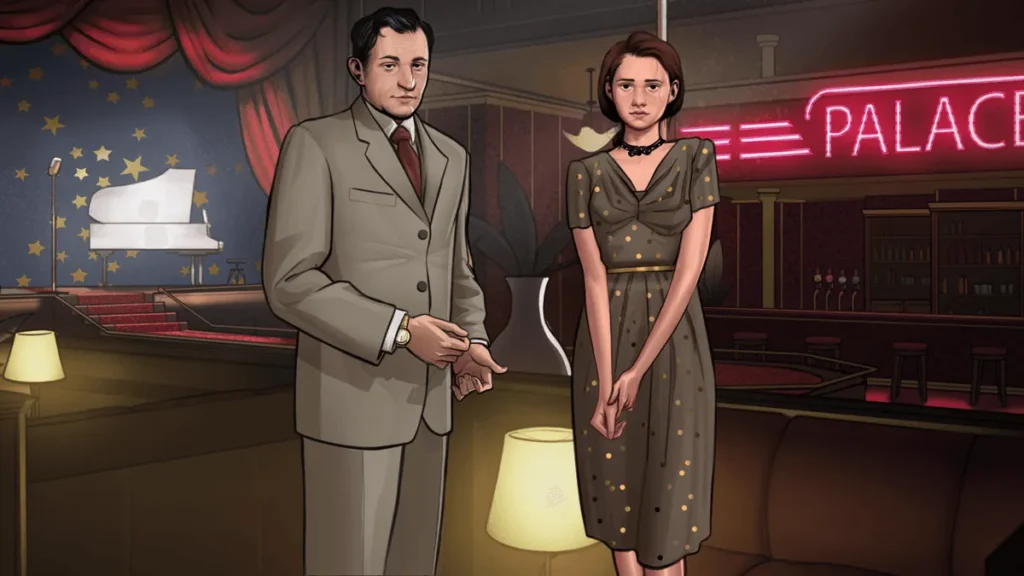
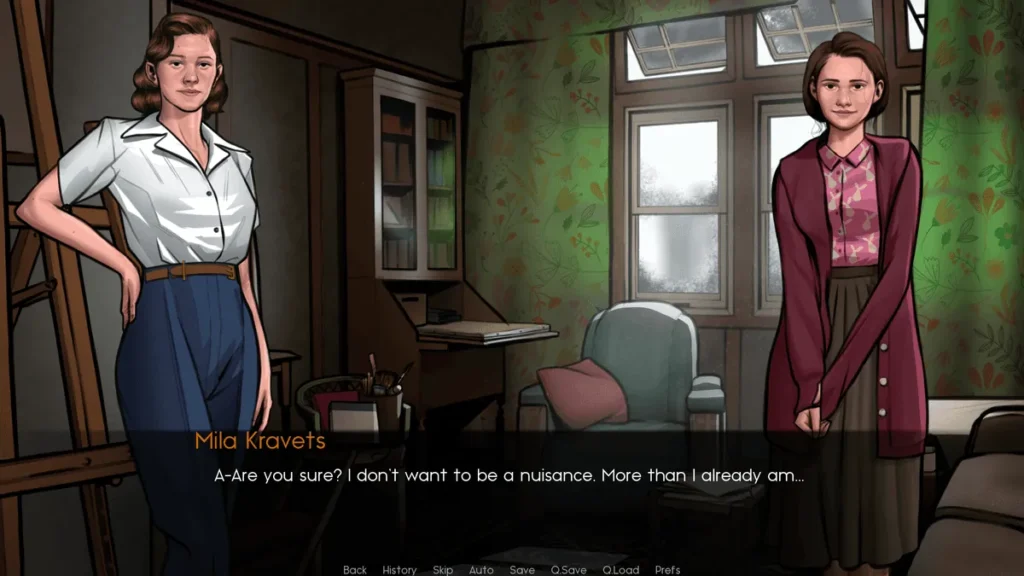

The Silver Lining review
Explore the immersive 1940s narrative experience with branching storylines and character-driven gameplay
The Silver Lining is an adult visual novel developed by NamusWill that transports players to a fictionalized 1940s America. The game follows a young refugee girl and her family as they navigate a complex web of intrigue while building new lives in a foreign country. With multiple branching paths, character-driven storytelling, and player choices that determine whether endings are sweet, bitter, or bittersweet, this Ren’Py-based title offers an engaging narrative experience. Currently in active development with version 0.9 released, the game continues to expand its content across Windows, macOS, Linux, and Android platforms. Whether you’re interested in visual novels, narrative-driven experiences, or character-focused storytelling, understanding what The Silver Lining offers can help you decide if it matches your gaming preferences.
Game Overview: Story, Setting & Character Development
Let’s be honest—some stories stick with you long after you’ve put the controller down or closed the laptop. They linger in your thoughts, making you wonder about the characters and the roads not taken. 😌 If you’re hunting for that kind of deep, narrative punch, then you’ve probably heard whispers about The Silver Lining. It’s not your average click-through adventure. This is a narrative-driven adult game that pulls you into a world of difficult choices, complex relationships, and the sheer will to survive.
At its heart, The Silver Lining visual novel story is an intimate, character-focused journey. You don’t just watch the tale unfold; you live it, breath by breath, through every consequential decision. It’s a masterclass in how interactive storytelling can make you feel truly invested. Let’s pull back the curtain on what makes this game so special, starting with the rich, tumultuous world it builds around you.
The 1940s Refugee Story and World Building
Close your eyes and picture it: America in the 1940s. 🗽 The iconic imagery is everywhere—swing music, classic cars, and a nation caught between the trauma of war and the glitter of a hopeful future. But The Silver Lining shows you the side of that era that history books often gloss over. This isn’t a backdrop of nostalgic glamour; it’s a gritty, authentic stage for a struggle that feels incredibly real.
You step into the worn-out shoes of a young woman who has fled the devastating conflict in Europe with her family. This core premise makes The Silver Lining a powerful 1940s refugee narrative game. You’re not a hero with a plan; you’re a survivor, desperate to carve out a sliver of safety and stability in a country that feels both enormous and strangely unwelcoming. The “American Dream” isn’t a given here—it’s a daily battle fought with frayed nerves and fragile hope.
The world-building is exceptional because it’s woven into every interaction. You feel the tension of being an outsider, the subtle prejudices, and the constant, low-grade fear of being discovered or falling through the cracks. The game introduces elements of web of intrigue and survival that go beyond mere physical needs. Your family is tangled in circumstances that aren’t entirely their fault, dealing with shadowy figures, debts, and moral compromises just to keep a roof overhead.
My Take: What hit me hardest wasn’t a big plot twist, but a small moment—choosing whether to spend your last few coins on food for your family or a newspaper to look for work. In that moment, the game’s setting stops being a painting and becomes a pressure cooker. It’s this relentless attention to emotional and practical detail that makes the world of The Silver Lining so immersive. 🎭
This setting does more than just set the mood; it actively shapes the character relationships visual novel mechanics. Every person you meet, from the potentially kind neighbor to the intimidating local businessman, is a product of this time and place. Your relationships are filtered through the lens of scarcity, suspicion, and the desperate need for connection. It’s a perfect storm for a story that will tug at your heartstrings and challenge your morals.
Character Relationships and Branching Narratives
If the 1940s setting is the stage, then the characters are the powerhouse performers who make you care. The Silver Lining truly shines in how it builds its cast. These aren’t just archetypes or romance options; they are flawed, multifaceted people whose lives become irrevocably intertwined with yours. Your journey is defined by The Silver Lining character interactions, each one a delicate dance of trust, need, and vulnerability.
The game presents you with a small but impactful circle of key figures. Your choices in dialogue and action don’t just raise a “like” meter; they alter the fabric of your shared story, creating a truly dynamic branching storyline choices system. A seemingly offhand comment to one character can ripple out and change how another perceives you chapters later.
To help you navigate this social minefield, here’s a breakdown of the pivotal people in your new life:
| Character | Role in the Story | Relationship Dynamics with the Protagonist |
|---|---|---|
| Tommy | The boy next door. He represents a glimpse of “normal” American life and youthful optimism. | A potential beacon of light and innocent romance amidst the darkness. Interacting with him offers choices between embracing simple joy or pushing it away to focus solely on survival. |
| Mr. Siegel | A local businessman with considerable influence and a shrouded past. He holds keys to opportunities, but at a potential cost. | This is a relationship built on power imbalance and moral complexity. He can be a crucial patron or a subtle antagonist, depending on your choices and how much of your integrity you’re willing to negotiate. |
| Frank | A man with his own scars from the war, trying to navigate peacetime. He’s often gruff and guarded. | Interactions with Frank explore themes of shared trauma and quiet understanding. He can become an unlikely ally, a reflection of hardened resilience, or a cautionary tale. |
| Juliette | A more established immigrant who has learned the rules of this new world. She’s stylish, savvy, and knows how to work the system. | Juliette can be a mentor, a rival, or a complex friend. She challenges the protagonist’s ideals and offers a path of pragmatic, sometimes cynical, adaptation to their new reality. |
This web of relationships is where the visual novel format proves its strength. The story is delivered through evocative art, poignant dialogue, and those critical moments of choice. You’re not just picking from a list of responses; you’re deciding who to be in this crisis. Will you be trusting or suspicious? Pragmatic or idealistic? These personality-defining choices directly steer the branching narrative structure.
For instance, dedicating time to comfort your younger sibling might strengthen your family bond (a core theme), but it could mean missing a chance to earn crucial money or deepen a connection with Tommy. The game constantly presents you with these meaningful trade-offs, ensuring no two playthroughs are the same. 😮💨
How Player Choices Shape Your Ending
This brings us to the ultimate payoff of your journey: the conclusion. The Silver Lining is renowned for its multiple endings gameplay, which isn’t about a simple “good” or “bad” finale. Instead, it offers nuanced conclusions that the developers aptly label as Sweet, Bitter, and Bittersweet. These endings are a direct mirror held up to the countless branching storyline choices you’ve made from the very first scene.
Think of your playthrough as weaving a tapestry. Every dialogue choice, every kept secret, every act of kindness or self-preservation is a colored thread. By the final chapter, the complete picture reveals itself—and it’s uniquely yours. There’s no “game over” screen; there’s only the poignant, earned consequence of the life you’ve lived in the game.
- The Sweet Ending: This isn’t about a fairy-tale perfection, which would feel false in this setting. 🍯 A “Sweet” ending reflects a path where you’ve managed to protect your core values—love, family, integrity—against tremendous odds. You’ve built genuine, trusting bonds and found a way to thrive, not just survive. It’s hard-won happiness that feels deserved.
- The Bitter Ending: Here, the weight of the world proves too heavy. ☕ This ending emerges from choices dominated by suspicion, isolation, or pragmatic sacrifices that cost you your soul. You might achieve a form of security or success, but it’s hollow, paid for with the relationships and innocence you once held dear. It’s a powerful, heartbreaking conclusion that underscores the game’s tough themes.
- The Bittersweet Ending: Arguably the most thematically resonant. This is the gray area where life lands for many of us. 🫖 You secure safety and preserve key relationships, but not without significant scars and losses. There’s hope for the future, but it’s tempered by the memory of what was sacrificed. This ending often feels the most authentic to the refugee experience—a mixture of relief and mourning.
Practical Tip: Don’t try to “game” the system on your first playthrough. The most rewarding way to experience The Silver Lining is to role-play authentically. Ask yourself, “What would I do in this impossible situation?” Then live with the results. Your emotional reaction to the ending you get is part of the game’s design genius.
Furthermore, the narrative-driven adult game continues to evolve. The developers regularly release updates that add new scenes, deepen existing character interactions, and expand the possible narrative branches. This means the story has a living quality to it; returning to a saved game months later might reveal new layers and paths you never knew existed, encouraging endless replayability to explore every shadowy corner of the story.
In the end, The Silver Lining visual novel story is more than a game—it’s an experience in empathy, consequence, and storytelling. It uses its historical setting not as a mere aesthetic but as a crucible for its characters. It builds a character relationships visual novel system where every connection matters, and it delivers on the promise of multiple endings gameplay with conclusions that will leave you thoughtful and moved. Your choices are the brush, and this poignant 1940s refugee narrative game provides the canvas for a masterpiece that is uniquely, unforgettably yours.
The Silver Lining stands out as a narrative-focused adult visual novel that prioritizes storytelling and character development within its mature framework. Built on the Ren’Py engine and available across multiple platforms, the game offers players a compelling 1940s-set narrative where their choices genuinely impact the story’s direction and ending. With active development continuing through regular updates, the game expands its content and features while maintaining its core focus on character relationships and branching narratives. Whether you’re drawn to interactive fiction, character-driven stories, or narrative experiences with meaningful player agency, The Silver Lining provides an immersive experience that rewards exploration of its branching paths. As the game continues development toward its planned midpoint and beyond, new content and features promise to deepen the experience further. If you’re interested in adult visual novels that emphasize story and choice, exploring The Silver Lining’s current version offers a solid entry point into what the complete game will eventually become.