By Justice or Mercy
Play By Justice or Mercy
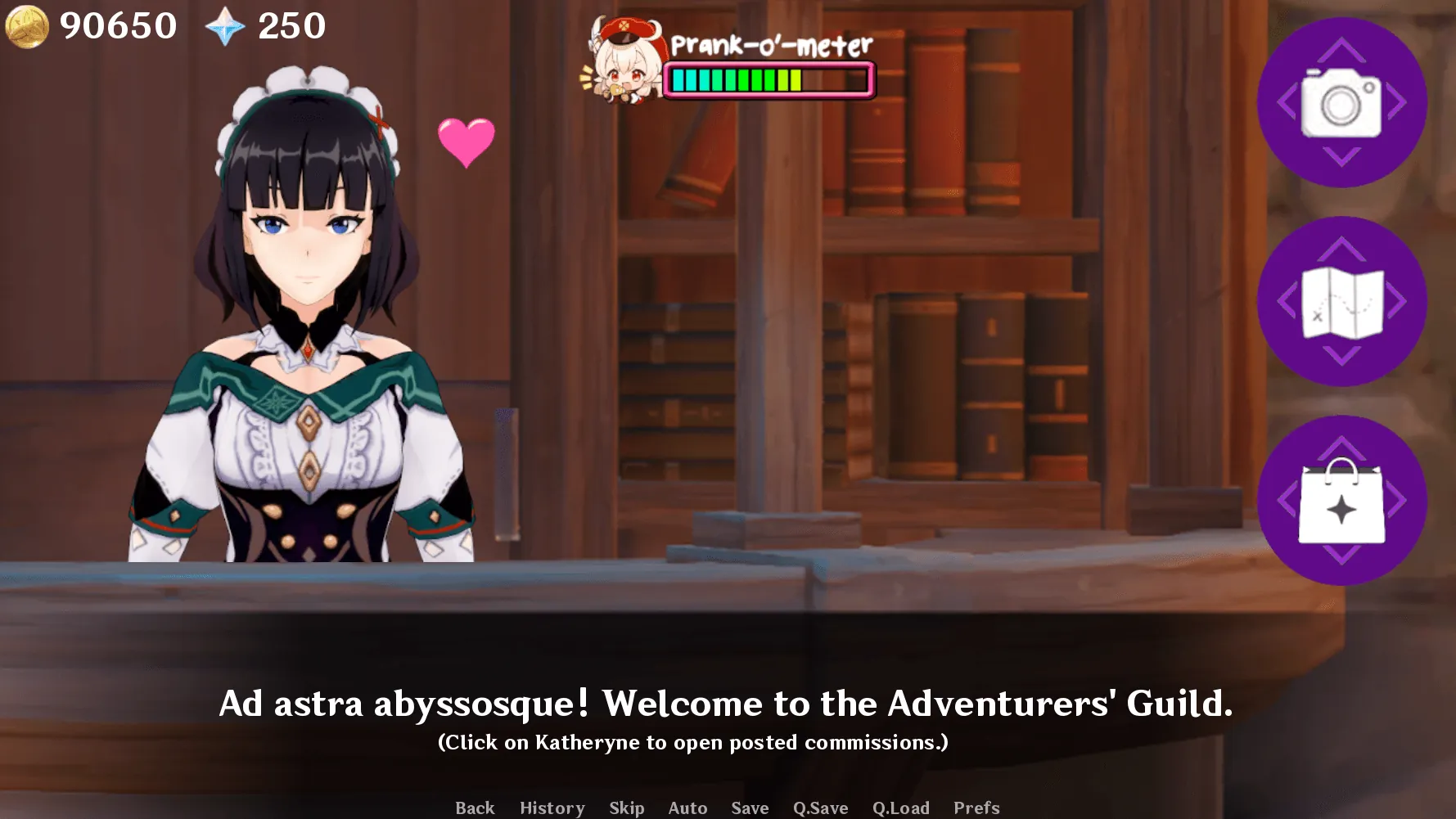
By Justice or Mercy Screenshots
















By Justice or Mercy review
Dive into choices, stories, and thrills of this captivating interactive adventure
Ever wondered what happens when your decisions shape a world of intrigue and passion? ‘By Justice or Mercy’ pulls you into a gripping interactive game where every choice counts. Developed by Abnormalsoftware, this title masterfully blends deep storytelling with player-driven outcomes, challenging you to balance justice and mercy in unexpected ways. I remember my first playthrough—heart-pounding moments that kept me up late, rethinking every path. If you’re hunting for an experience that rewards replayability and immersion, this is it. Let’s explore what makes ‘By Justice or Mercy’ a standout in interactive gaming.
What Makes By Justice or Mercy a Must-Play?
I still remember the first time I booted up By Justice or Mercy. I was just looking for a short, narrative driven adventure to kill an evening. Three hours later, I was staring at the screen, my mind reeling from a devastating consequence I never saw coming—all because of a single, seemingly minor choice I’d made an hour prior. That’s the moment I knew Abnormalsoftware had created something special. This isn’t just a game you play; it’s a world you inhabit, a weight you feel, and a story you genuinely author. If you’re wondering what is By Justice or Mercy at its heart, it’s the purest form of a player driven story I’ve experienced in years. 😲
Let’s pull back the curtain on this captivating Abnormalsoftware game.
Unpacking the Core Gameplay Mechanics
At its core, By Justice or Mercy gameplay is elegantly simple, yet infinitely complex. You navigate beautifully crafted scenes, interact with characters, and make decisions. But these aren’t the cosmetic “illusion of choice” decisions you find in lesser titles. Every dialogue option, every action, and every silent moment of hesitation is logged by the game’s intricate narrative engine. Think of it as a living, breathing decision tree where every branch splits into a dozen more, leading to profoundly different endings.
The game masterfully avoids cumbersome mechanics, keeping you focused on the narrative driven adventure. You’ll manage a simple inventory and explore environments for clues, but the real “progression” system is the state of the world and your relationships. The save system is your friend here—use it often and create multiple slots! You’ll want to revisit key moments to see how a different path unfolds.
Here’s what makes the core loop so compelling:
* Branching Narrative Paths: Your journey is uniquely yours. A character you befriend in one playthrough might become your bitter enemy in another.
* Multiple Endings: We’re not talking about a simple “good” or “bad” ending. The conclusions are nuanced, reflecting the sum of your moral calculus.
* High Replay Value: One playthrough only shows you a fraction of the content. Discovering how early choices ripple forward is a thrill in itself.
To visualize the weight of your decisions, consider this simple breakdown of a common early-game scenario:
| Your Choice | Immediate Reaction | Potential Long-Term Consequence |
|---|---|---|
| Show Mercy to a desperate thief | The character is grateful, offers information. | They may become a loyal ally, or their freedom could lead to unforeseen harm for others later. |
| Enforce Strict Justice on the thief | The character is arrested, you recover the stolen goods. | You gain a reputation for being rigid, closing off avenues of information from the fearful underworld. |
| Ignore the situation entirely | The theft succeeds, you avoid immediate conflict. | You demonstrate passivity, which powerful figures may interpret as weakness or complicity. |
See? Even a “simple” choice has layers. This is the essence of By Justice or Mercy gameplay.
Why Player Choices Drive the Narrative?
In many games, choices are like pebbles thrown into a lake—they create a brief splash, then the water smooths over. In this interactive choice game, your choices are boulders. They permanently alter the shoreline. The genius lies in how the game makes you feel the consequences, not just see them. A character you were harsh with might not deliver a crucial warning later. An act of compassion might return to aid you in a desperate hour.
The central justice vs mercy choices are never black and white. Is it merciful to spare a villain who will undoubtedly hurt others? Is it just to punish a criminal who was driven to crime by a corrupt system? The game constantly challenges your initial principles. I recall a mid-game dilemma where I had to decide the fate of a corrupt official. Choosing “justice” felt righteous, but it plunged the district into chaos without his stabilizing (if illicit) influence. Choosing “mercy” and leveraging him for the greater good made my skin crawl. There was no “winning,” only living with the outcome. That’s a player driven story at its most powerful.
My practical advice for your first playthrough? Don’t try to game the system. Play authentically. Go with your gut reaction. That first, unspoiled journey is magical because it’s truly yours. You can always min-max your morality on a second run. This approach makes the emotional depth of the narrative driven adventure hit so much harder.
“I played through three times, convinced I knew all the secrets. On my fourth, a character I’d never even met before showed up because of a chain of choices I’d never made. My jaw was on the floor. This game has layers upon layers.” – A fellow player’s testimonial.
Exploring Themes of Justice and Mercy
This is where By Justice or Mercy transcends being just a game and becomes a poignant exploration of human morality. The title isn’t just a catchy phrase—it’s the fundamental question posed to you in every chapter. Abnormalsoftware doesn’t preach; they present. They give you a world stained with grey and hand you the brush, letting you decide what shade of morality to paint with.
The theme of moral ambiguity is masterfully woven. Characters are multifaceted—victims can be vengeful, and antagonists can have heartbreaking motivations. You’re forced to constantly weigh abstract ideals against practical, often brutal, reality. This Abnormalsoftware game stands out from other choice-based adventures because of its relentless focus on consequences. It’s not about picking a side (“Lawful Good” or “Chaotic Evil”), but about witnessing the real, messy fallout of your philosophical stance on the lives of pixel-perfect people you come to care about.
The emotional depth comes from that connection. When a character you’ve nurtured trust with over hours of gameplay looks at you with betrayal or gratitude, it lands. It feels earned. This is the hallmark of a truly great interactive choice game.
To get the most from these themes, talk to everyone. Examine everything. The world is dense with lore and minor stories that reflect the central conflict. Sometimes, the most profound justice vs mercy choices are hidden in optional dialogue with a minor character.
So, is By Justice or Mercy a must-play? Without question. It’s a masterclass in player driven story mechanics and a deeply engaging thought experiment on morality. Your first journey through its world will stay with you long after the credits roll—and you’ll almost certainly be compelled to start again, wondering “what if…?”
Ready to dive deeper? In our next chapter, we’ll map out specific branching paths and hidden endings, giving you the tools to unravel every secret this incredible narrative driven adventure has to offer. 🕵️♂️➡️
Diving into ‘By Justice or Mercy’ transformed how I view interactive storytelling—every choice feels alive, pulling you deeper into its world of tough calls and rewarding paths. From unraveling mechanics to mastering endings and uncovering secrets, this game by Abnormalsoftware delivers thrills that linger. My own journeys through justice and mercy paths taught me the power of replaying with fresh eyes. If you’re ready for an adventure where you call the shots, grab it now, experiment boldly, and share your tales in the community. Your next favorite story awaits—what path will you choose?