
神的不在場SEX Screenshots






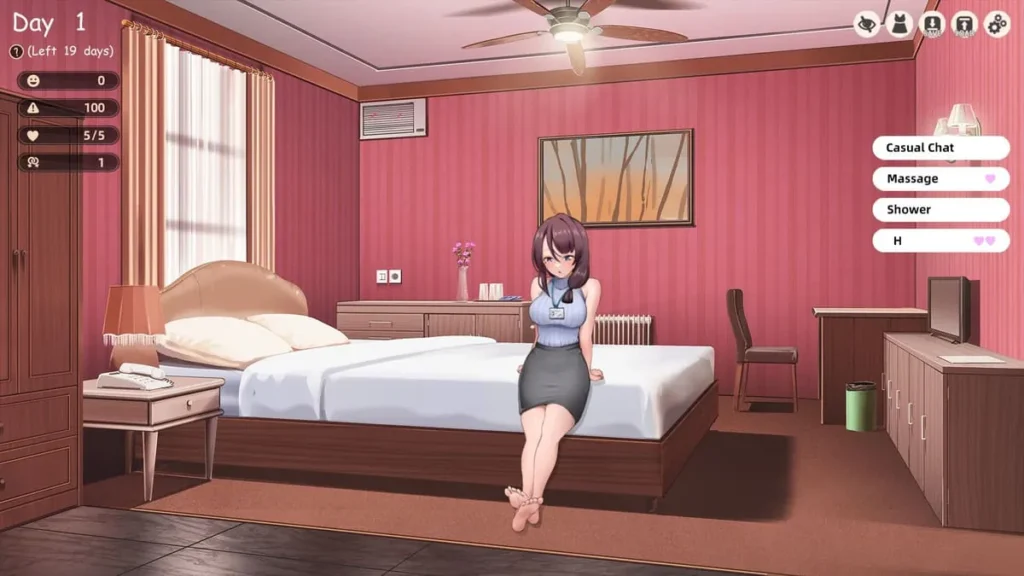
神的不在場SEX review
Exploring the mechanics, narrative choices, and unique features of this indie visual novel
神的不在場SEX stands out as a distinctive indie visual novel that blends narrative depth with interactive gameplay mechanics. Released in March 2024 by Maker製造機 and 樹懶叫工作室, this game has garnered attention for its branching storyline system and meaningful choice mechanics. Whether you’re a seasoned visual novel enthusiast or exploring the genre for the first time, understanding what makes this title unique can help you decide if it aligns with your gaming preferences. This comprehensive guide explores the core gameplay systems, narrative structure, and features that define the experience.
Core Gameplay Mechanics and Story Framework
Ever felt like your choices in a game were an illusion? Like you were just clicking through dialogue trees that all converged on the same two or three endings? 🫠 I know I have. It leaves you wondering what the point was. This is precisely where 神的不在場SEX turns the entire concept on its head. It presents a choice-based game where the consequences aren’t just narrative flavor text—they are the entire architecture of the experience. Your decisions actively sculpt the world, lock away entire character arcs, and fundamentally alter your path to one of over nine possible conclusions. This isn’t just interactive storytelling; it’s a high-stakes character relationship management simulator wrapped in a haunting, divine mystery. Let’s dive into the core systems that make this visual novel consequence system so uniquely compelling.
How the Branching Dialogue System Works
The branching dialogue system visual novel fans dream of is alive and well here. Forget simple “good vs. evil” prompts. In 神的不在場SEX, every line you choose to speak, every subtle gesture you make, and every secret you opt to reveal or conceal acts as a key—or a deadbolt. 🗝️ The game’s structure is less of a tree and more of an intricate, sprawling web. A choice in the first hour can render an entire subplot or character interaction completely inaccessible by day ten, without any warning or “point of no return” notification.
This creates an atmosphere of genuine tension. You’re not just choosing what feels narratively “right”; you’re managing resources, trust, and emotional states with real-time repercussions. The game masterfully avoids the common pitfall of obviously “correct” choices. Instead, it presents you with morally gray, emotionally charged decisions that feel true to the claustrophobic, pressure-cooker scenario the protagonists are in.
🧩 Pro Tip: On your first playthrough, abandon the idea of a “perfect run.” Embrace the anxiety of your decisions. The most authentic (and often most narratively rich) experience comes from role-playing your gut reactions, not trying to game the system.
Let me give you a concrete example from my own playthrough that perfectly illustrates this interactive storytelling mechanics at work. Early on, you have the opportunity to confide in a secondary character about your growing fears regarding the room’s mysterious “conditions.” You’re given a choice: be completely honest, deflect with humor, or shut down the conversation entirely.
- I chose honesty, seeking an ally. This unlocked a later path where that character provided crucial information about the “Karma Mirror,” but it also meant the main female protagonist, Li Ruoli, overheard part of the conversation. Her happiness value took a small, immediate dip because she felt I was discussing our plight behind her back. My attempt to build one bridge subtly weakened another.
- A friend of mine chose the humorous deflection. This kept Ruoli’s happiness stable in that moment and later allowed for a unique, lighter-hearted mini-scene with that secondary character. However, it permanently locked away the deeper lore about the mirror that my path uncovered, changing how we both interpreted the game’s central mystery.
This is the genius of its branching dialogue system. It’s not about massive, plot-altering decisions every five minutes. It’s about the cumulative weight of small, intimate moments. A comforting touch, a withheld truth, a shared memory—each one nudges the story onto a different track, making you feel the immense responsibility of guiding two lives through an impossible situation.
Now, to give you a clear overview of how these systems interconnect, let’s look at the key pillars of the 神的不在場SEX gameplay mechanics.
| Gameplay Element | Core Function | Player Impact |
|---|---|---|
| Branching Storylines | Drives the narrative toward 9+ endings determined by morality, relationship depth, and hidden luck factors. | Every dialogue choice permanently opens or closes story paths and character interactions. |
| Karma Mirror | Provides real-time visual feedback on choices, directly affecting NPC attitudes and world state. | Immediate, tangible consequences for compassionate or selfish actions, altering how the story unfolds. |
| Mini-Games | Optional puzzle-solving segments scattered throughout the 19-day cycle. | Success unlocks hidden lore, backstory fragments, and deeper understanding of the divine rules. |
| Content Toggle | Allows players to enable or disable adult content. | Lets players tailor the experience to be purely story-focused or include the full intended narrative scope. |
The Karma Mirror: Consequences That Matter
If the branching dialogue is the brain of the game’s consequence system, then the Karma Mirror game mechanic is its beating heart—and its most ingenious feature. 🪞 This isn’t a hidden morality stat buried in a menu. It’s a physical object within the game world, a mirror that reacts visibly and immediately to your ethical and emotional choices.
The rules are simple yet profound:
* Perform a selfish, cruel, or deceitful act? The mirror cracks. A sharp, jarring sound accompanies a new fissure spreading across its surface.
* Show compassion, honesty, or make a sacrifice for another? The mirror glows with a soft, warm light, and existing cracks may even subtly mend.
This isn’t just for show. The state of the Karma Mirror directly influences the character relationship management game at the core of your survival. NPCs you interact with will react to the mirror’s state. A heavily cracked mirror might make them wary, distrustful, or less likely to offer help or information. A pristine, glowing mirror can open up dialogue options that were previously cold and closed, leading to deeper connections and new pathways in the branching dialogue system.
I remember one pivotal moment where I had the chance to hoard a scarce resource (a special medicine) that could slightly boost Ruoli’s happiness. Keeping it would give me a small buffer. However, another trapped individual was in visible, severe pain. Giving it away offered no direct gameplay benefit to my primary goals.
I kept it. The crack from the mirror was so loud and visually stark it made me physically flinch. 😣 In the next story beat, Ruoli, who had witnessed my choice indirectly, was distant and melancholic. Her transgression value (a measure of her guilt and spiritual burden) barely budged that day, as my action reinforced a selfish worldview. The game had successfully made me feel the spiritual and relational cost of a pragmatic decision. The Karma Mirror game mechanic transforms abstract morality into a tangible, ever-present force.
Narrative Structure and Multiple Endings
All these intricate mechanics serve a narrative that is both intimate and cosmically significant. You play as a man reunited with Li Ruoli, your former college crush, who is now married. This already tense reunion is shattered when both of you are mysteriously abducted and locked in a strange room by a seemingly divine entity. You are given 19 days and a set of cryptic conditions to meet. This is the crucible in which the story is forged.
Your primary objectives are deceptively simple on paper, but incredibly complex in practice:
1. Manage Li Ruoli’s Happiness Value (0-100): Keep her spirit from breaking under the immense pressure and surreal horror of your situation.
2. Reduce her Transgression Value (100-0): Help her overcome the guilt, shame, and spiritual “burden” she carries, which is intrinsically tied to the room’s mystery.
3. Unlock all CG scenes: Experience the full breadth of the story’s visual and emotional moments.
Balancing these goals is the essence of the character relationship management game. Do you tell a comforting lie to boost Happiness now, even if it increases Transgression later? Do you confront a painful truth that crashes her mood but starts the healing process? The game doesn’t judge you; it simply reflects your priorities in the endings you achieve.
And what endings they are! With 9+ possible endings, 神的不在場SEX truly delivers on the promise of a multiple endings choice-based game. These conclusions aren’t just “Good, Bad, and Secret.” They are nuanced epilogues shaped by the core pillars of your journey:
* Morality: Was your path defined by selflessness or survival at any cost? The final state of your Karma Mirror is a key determinant.
* Relationships: Did you build a genuine, complex bond with Ruoli, or was your connection purely transactional? Did you manage to connect with any of the other enigmatic figures in this prison?
* Luck & Discovery: Did you solve the optional puzzles and mini-games? Did you uncover the hidden lore about the “divine absence” hinted at in the title? Some endings are only accessible by piecing together the deepest secrets of the game’s world.
The inclusion of optional puzzle-based mini-games is a masterstroke. 🧠 They aren’t filler; they are gateways to understanding. Solving them rewards you with fragments of lore—notes, visions, echoes of past events—that explain why you are here and what the “conditions” truly mean. This knowledge doesn’t just add flavor; it can fundamentally change the context of your choices and unlock the most profound, and often most bittersweet, conclusions in this multiple endings choice-based game.
Finally, the Content Toggle deserves special mention. It respectfully acknowledges that players engage with stories for different reasons. You can experience the complete, intended narrative with all its mature themes and scenes, or you can toggle them off for a purely story-focused, emotional journey. This flexibility ensures the deep interactive storytelling mechanics and rich character relationship management are accessible to all who appreciate a serious, choice-driven narrative.
In the end, the 神的不在場SEX gameplay mechanics work in sublime harmony to create an experience where you are not just a passenger in a story, but its architect. Every whispered conversation, every reflected crack in the mirror, and every managed stat point is a brushstroke on a canvas that can depict tragedy, transcendence, or something hauntingly in between. It’s a powerful reminder that in the most confined of spaces, faced with the most daunting of puzzles, the most complex system to manage is the human heart.
神的不在場SEX represents a thoughtful approach to interactive storytelling, combining meaningful choice systems with visual feedback mechanisms that make player decisions feel consequential. The game’s branching narrative structure, Karma Mirror mechanic, and multiple ending system create a framework where every action shapes the story’s direction and character relationships. With its optional content toggle and focus on narrative depth, the game appeals to players seeking both engaging gameplay and compelling storytelling. Whether you’re drawn to choice-driven narratives, relationship-building mechanics, or games that respect player agency, this title offers a distinctive experience worth exploring.